
Latest Publications
Latest Book
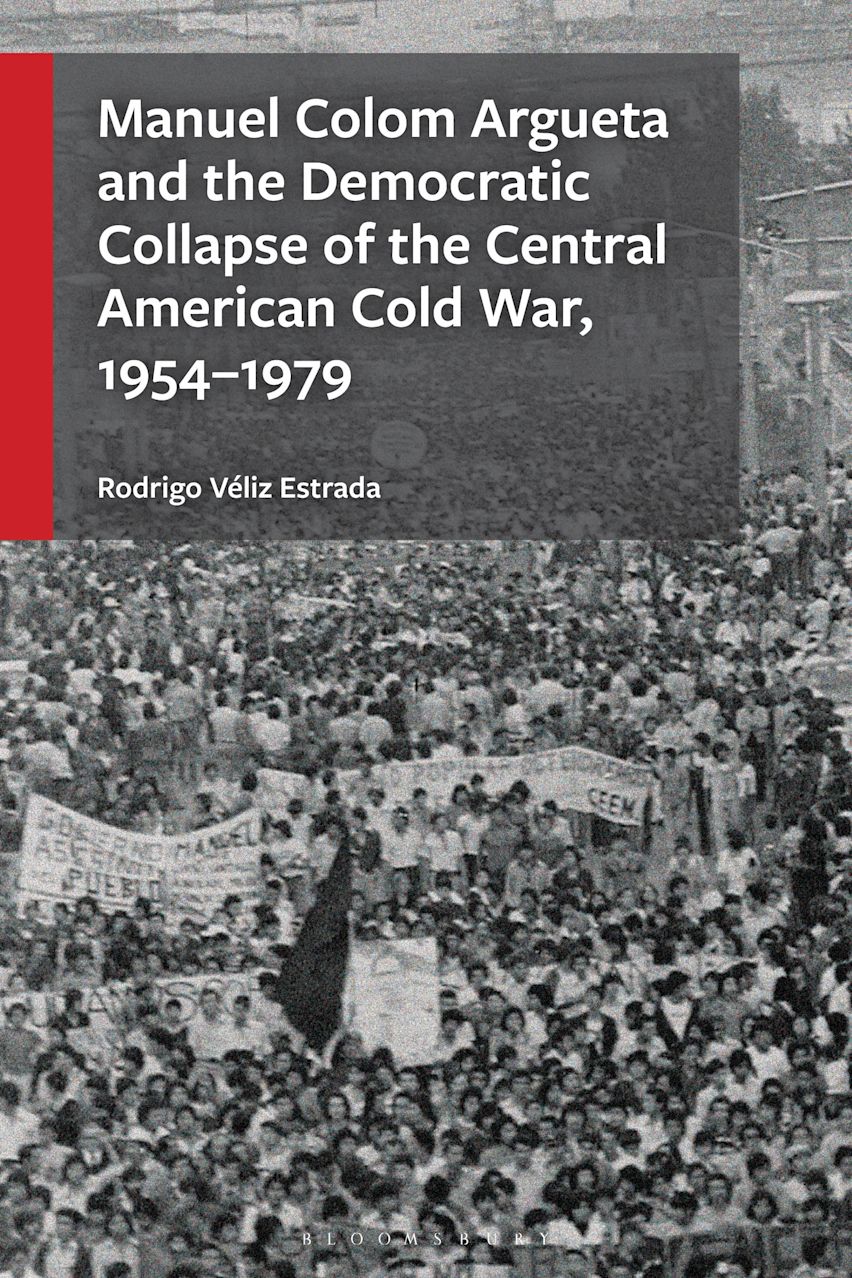
Rodrigo Véliz Estrada (2026)
Manuel Colom Argueta and the Democratic Collapse of the Central American Cold War, 1954–1979. New York: Bloomsbury Academic.
Exploring the life of one of Central America's understudied political figures, this volume follows Manuel Colom Argueta's exploits, philosophy, and impact amid the Central American Cold War. Drawing on archival research across six countries, it offers a detailed account of how Colom Argueta and his political movement navigated a polarized landscape shaped by authoritarian rule, guerrilla insurgency, and international pressure. Focusing on Colom's efforts to advance democratic socialism through institutional means, the book navigates his political philosophy emphasizing urban policy, popular participation, and inter-municipal cooperation. Colom's assassination in 1979, shortly after achieving legal recognition for his party, marked a critical turning point in Guatemala's descent into widespread political violence. Rather than treating political violence as inevitable, this monograph underscores how political alternatives were systematically dismantled by domestic elites and international actors.
Latest Article
Rodrigo Véliz Estrada (2025)
«"Cúmplices da sua política tiránica": The Arming of a Tyrant and Brazil's Role in the Military Escalation of the Latin American Cold War, 1944–54»
Journal of Latin American Studies [Q1]. Cambridge University Press.
This article examines why, beginning in 1946, the Brazilian government under President Eurico Dutra supplied arms to Dominican dictator Rafael Trujillo, fuelling a regional arms race and reshaping Caribbean Basin dynamics at the onset of the Cold War. It argues that these transfers bypassed conventional diplomatic channels, reflected radical anti-communist currents within Dutra's inner circle and undercut US non-proliferation efforts. Far from a passive ally, Brazil emerged as a pivotal, if under-recognised, actor in the continental polarisation that led to democratic collapse in Venezuela (1948), Cuba (1952) and Guatemala (1954). The article challenges assumptions of Brazil's limited Latin American engagement and repositions Dutra's foreign policy within broader continental strategies of ideological alignment and regional influence.